Panel swap versus full door
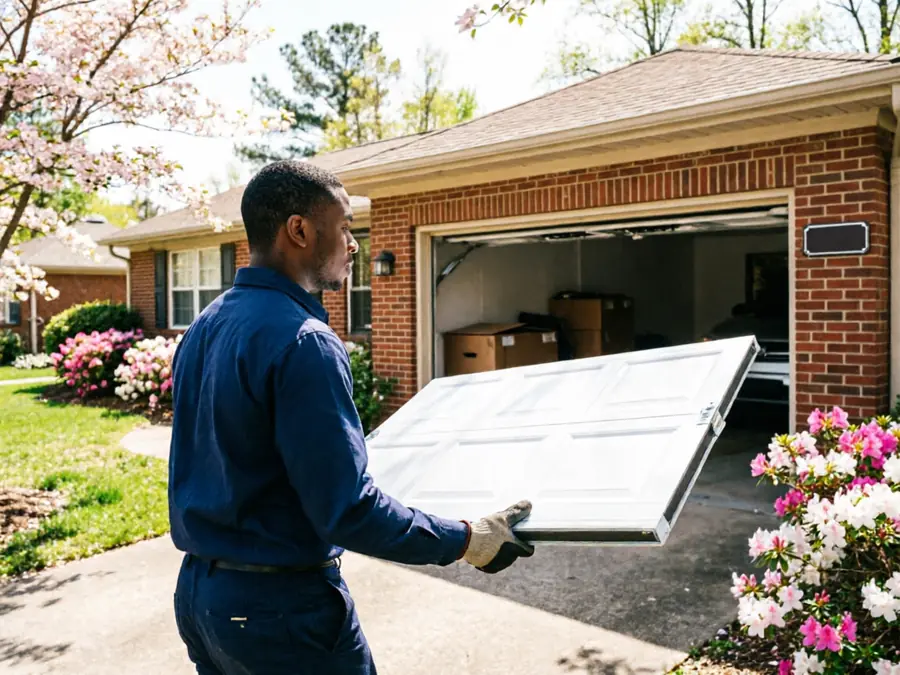
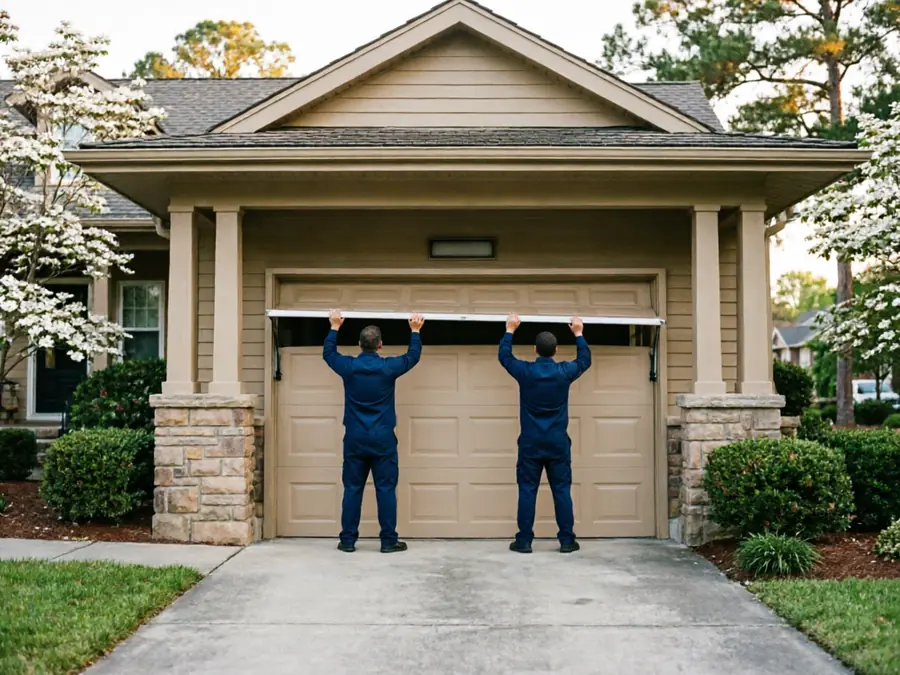
What we can tell you: a single panel replacement on a common steel door is almost always cheaper than a full door swap, as long as the track, springs, and opener are still sound.
Buford, GA
Dented or cracked garage door panels are common in Buford's 2000s-era homes. See why panel failure happens here and what a replacement job actually involves.
Local causes
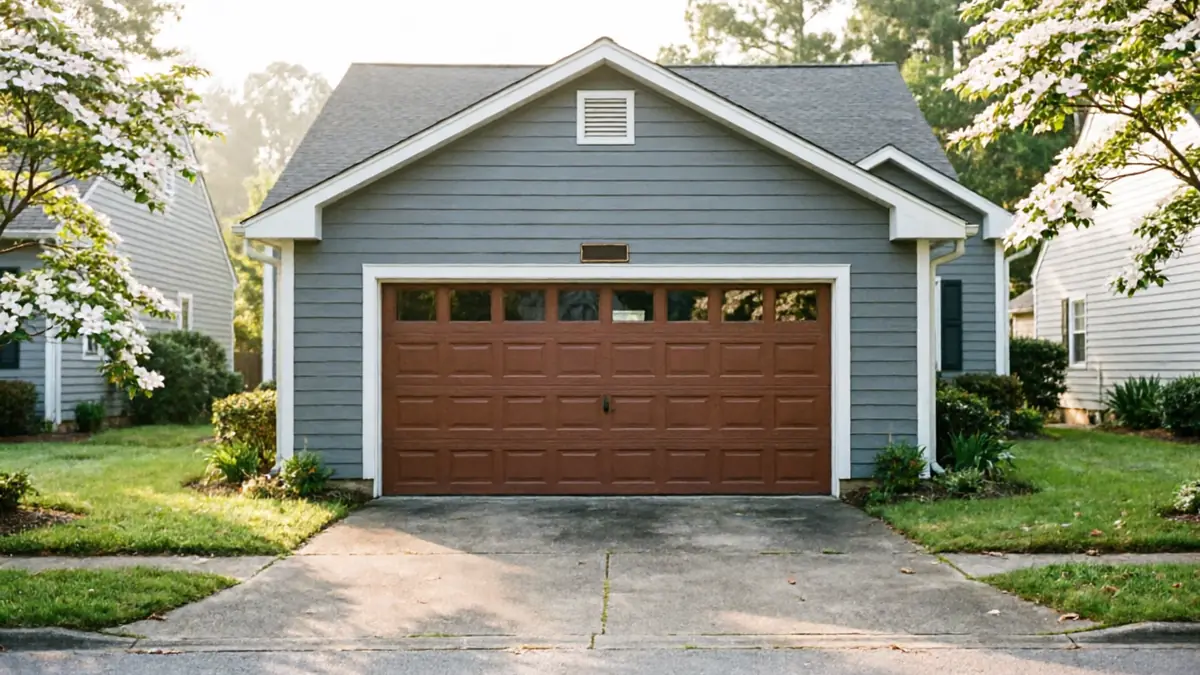
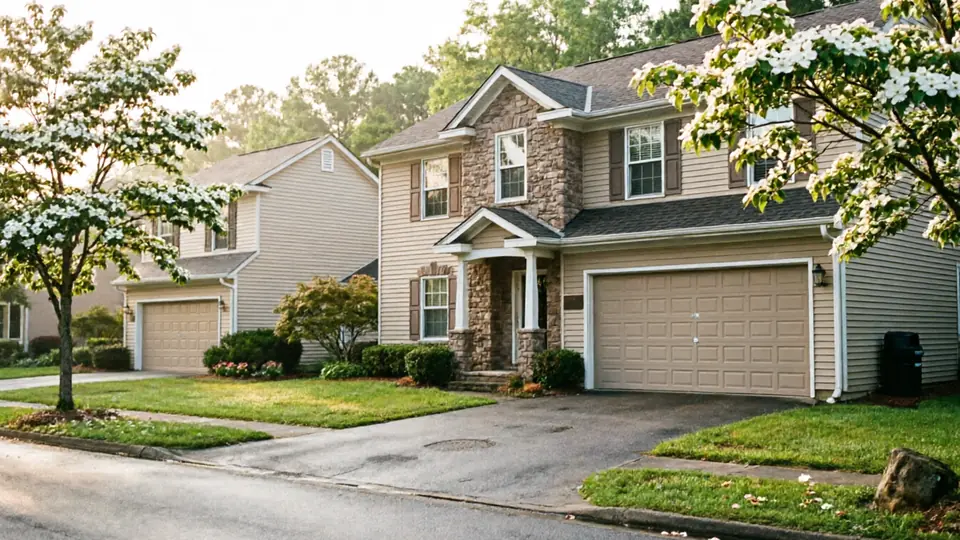
Most houses in this part of the service area went up between 1990 and 2012, with the median build year sitting around 2001. That's the era when steel sandwich-panel doors with thin skins and foam cores became the standard builder-grade install across the 11 named areas here. Those panels were never meant to last the life of the house - they were meant to meet a spec sheet at closing.
Add the climate band this area sits in: cold-moderate, with real freeze-thaw swings through winter and into early spring. That cycling works on the foam-to-steel bond inside a panel. Moisture gets into a ding or a seam, freezes, expands, and the skin starts to separate from the core. You'll see it first as a soft spot or a bubble, usually on the bottom two panels where a bumper tap or a stray basketball already weakened the metal.
So the pattern in Buford isn't random damage - it's original builder-grade panels, now twenty-plus years old in a lot of these subdivisions, meeting a climate that doesn't let a weak seam heal itself. One bent panel on a non-insulated door usually means the others aren't far behind.
Pricing
We don't have a flat number to quote you here, because panel cost swings more than almost anything else on a garage door. A single steel panel to match an existing door runs different than a full insulated panel section, and if your door is more than a few years old, color and panel profile matching gets harder - some manufacturers change tooling and discontinue runs, so a 'simple' one-panel swap can turn into sourcing an obsolete match or replacing more panels than the one that's actually damaged.
What we can tell you: a single panel replacement on a common steel door is almost always cheaper than a full door swap, as long as the track, springs, and opener are still sound.
Where it gets expensive is when the damage is old enough that the bent panel has been stressing the rollers and track on that side, which turns a panel job into a panel-plus-hardware job once we're actually in front of it.
Given the income range in this service area, most homeowners are weighing panel repair against full replacement rather than just paying whatever a quote says - so we give you both numbers before you decide, not after.
On the truck
For a panel job we carry common steel panel sections in standard residential widths and the usual colors builders used across this area's 2000s-era subdivisions - white, almond, and sandtone cover most of what we run into.
We also carry the hardware that panel damage tends to take out with it: end hinges, center hinges, and the short sections of track that get tweaked when a panel buckles. What we don't carry on the truck is every discontinued panel profile from every manufacturer.
If your door is an older or less common brand, we may need to order the exact panel and come back for a second visit rather than finishing in one trip. We'll tell you that on-site, before we start, not after we've opened something up.
We also carry fasteners, panel-to-panel seals, and insulation foam for anyone upgrading from a non-insulated door to an insulated panel set, since that's a common ask once a panel's already being swapped.
Warning signs
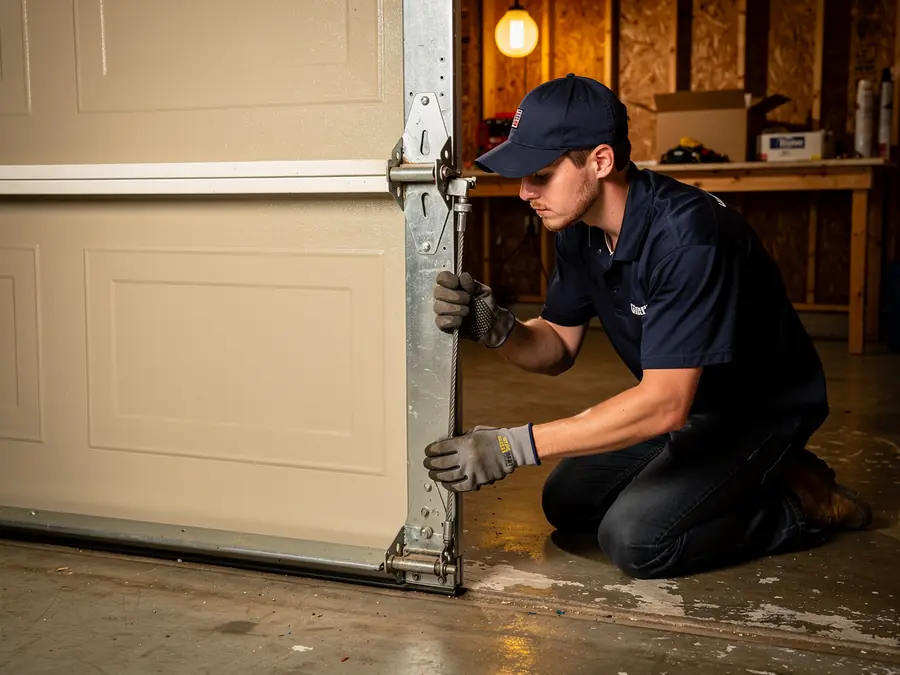
A bowed or bubbled panel, usually on the bottom section, is the most common call we get for this. Sometimes it's a straight dent from a car bumper or a basketball; other times it's a slow separation where the panel looks fine from six feet away but flexes when you push on it, which is the foam core letting go from the steel skin.
You might also notice the door binding or scraping partway through its cycle - that's usually the bent panel pushing the roller off-track on that side, not a spring or opener problem, even though it can sound like one. If only one panel is affected and the rest of the door is original and in decent shape, a panel swap is the right call. If you're seeing rust streaks, multiple soft panels, or the door is original to a 1990s or early-2000s build and showing wear across several sections, replacing the whole door is usually the better money.
Questions
Often, yes, if the door uses a common steel panel profile. Builder-grade doors from this area's 2000s construction boom used a handful of standard profiles and colors, which helps. Less common brands or older doors sometimes use discontinued profiles, and in that case we may need to source a specific match before we can finish the job.
Not necessarily. If the rest of the door is original, untouched, and still cycling smoothly, a single panel swap is usually the right fix. It becomes a whole-door conversation when several panels are soft, the track or rollers are already stressed, or the door is old enough that matching panels is no longer practical.
The service area sits in a cold-moderate climate band with freeze-thaw cycling through winter. Moisture that gets into a dented or seamed panel freezes and expands, which pries the steel skin away from the foam core. A ding that looked cosmetic in October can be a soft, flexing panel by February.
Explore more
Ready when you are
Buford Garage Door Pros repairs and installs garage doors, springs and openers in Buford, GA and the surrounding area.