What Local Conditions Do
Buford's housing stock skews young for Georgia - most of it went up between 1990 and 2012, with the median build year landing around 2001. That matters for noise because it means the springs, rollers, and openers behind most of these doors are original or close to it, and they're all the same generation of hardware across the eleven named areas that make up this build-out. A door installed in 2001 is now old enough that the factory lubricant has broken down, the galvanized coating on torsion springs has started to flake, and nylon rollers that were fine for the first fifteen years are drying out and cracking. None of that shows up as a visible problem. It shows up as sound - first a squeak, then a grind, then a bang when something finally lets go. In a climate band that sits in the cold-moderate range, the metal in that hardware contracts in winter and expands again in summer every year, and that cycle is what turns a quiet door into a noisy one. The point isn't that your door is broken right now. It's that the noise is the door telling you where it is in that cycle, and in a neighborhood this uniform in age, a lot of doors are telling the same story at once.
The Problem
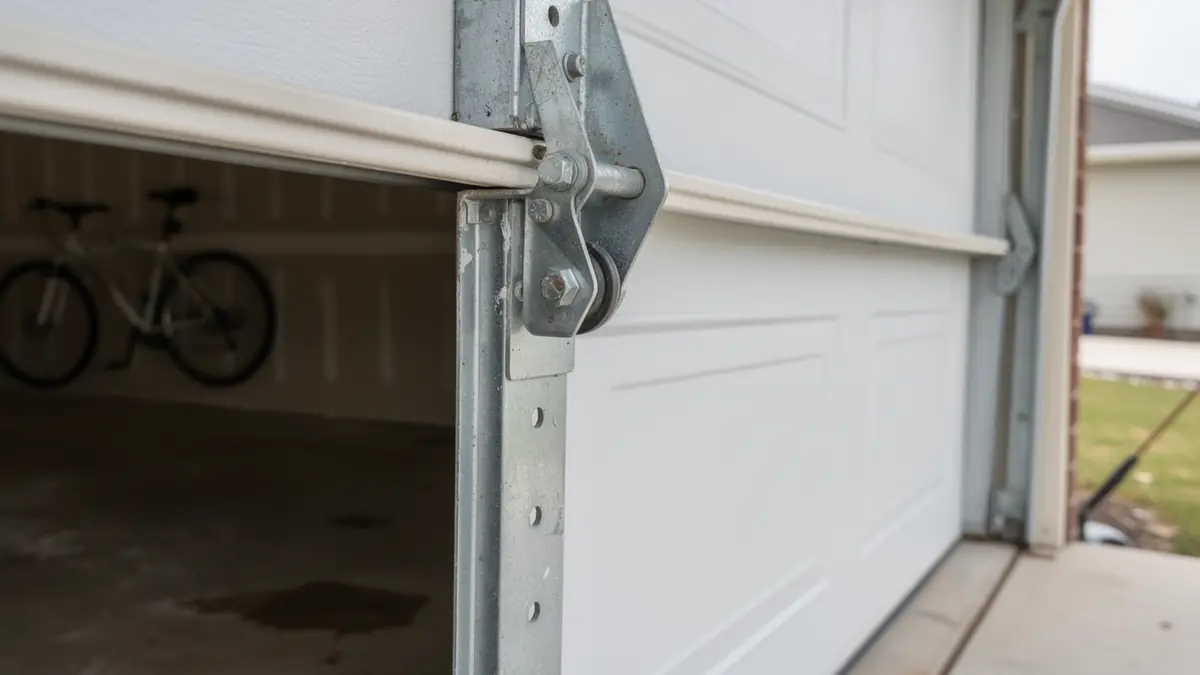
A rhythmic thump once per rotation is almost always a flat spot on a roller - common once a roller passes the fifteen-year mark, which lines up with a lot of the 2000s-built doors around here. A sharp metallic pop, usually loudest right when the door starts moving, is more often a torsion spring losing tension or a cable starting to fray at the drum. A grinding sound that gets worse as the door travels is usually the track itself, bent or out of alignment, sometimes from age and sometimes from someone backing into it. Each of these sounds has a different urgency. A dry roller squeak can wait weeks. A spring that pops once and goes quiet again should not wait at all - a torsion spring under tension that's starting to fail can let go completely without warning, and a door coming down on a full spring failure is a different kind of call than a squeaky roller. The honest limitation here: a sound alone doesn't always tell us which part failed, and a phone diagnosis on noise is a guess. What we can say with confidence is that houses built in the 1990-2012 window are now squarely in the age range where original hardware starts failing, not because it was installed badly, but because twenty-plus years is close to the normal service life for a torsion spring under regular use.
What It Costs
We're not going to put a number here that doesn't match what we'd quote you standing in your driveway - door size, spring count, and what's actually failed all move the price, and guessing at it in writing does nobody any favors. What we can tell you is what drives the cost: whether it's a single roller or a full set, whether one spring needs replacing or both (and on a door this age, if one has gone, the other isn't far behind), and whether the track needs realignment or full replacement. Given the median household income in this service area sits around $82,692, most of what we see is homeowners choosing to fix rather than replace when the door itself is sound - the panels and track are usually fine on a 2000s-era door even when the spring or opener isn't. Replacement only makes sense when the door itself is warped, the track is bent beyond realignment, or the repairs start stacking up faster than a new door would cost. We'll tell you straight if you're at that point instead of running up a repair bill on a door that's done.
The Seasonal Bit
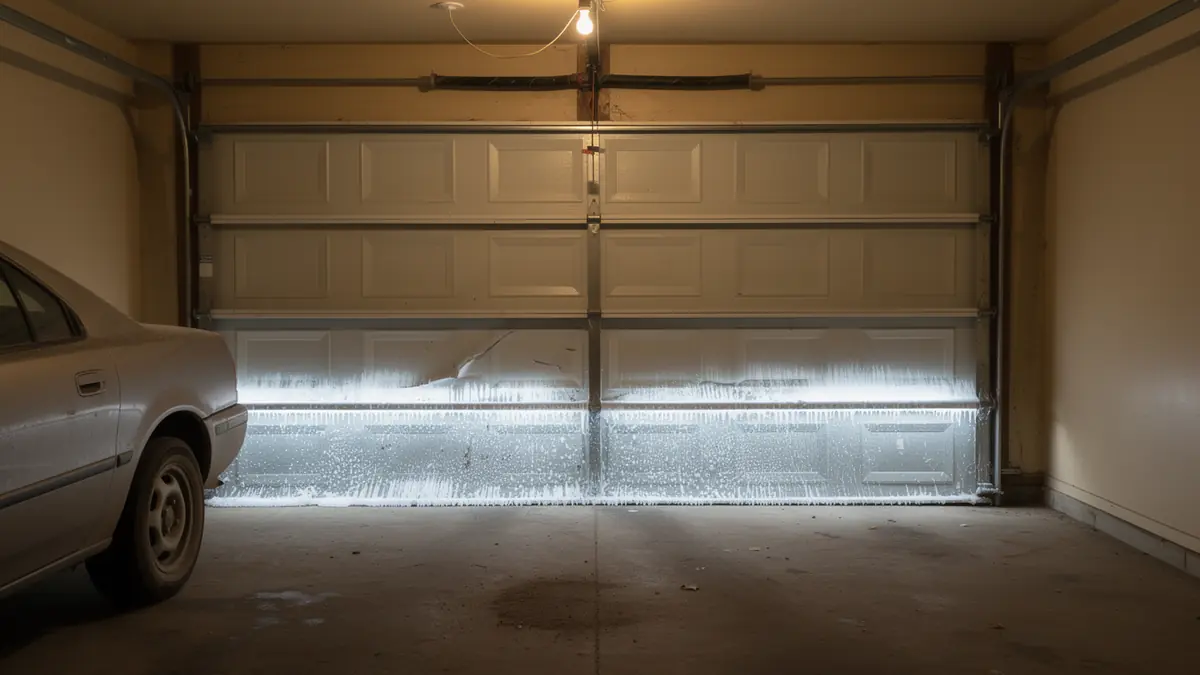
The cold-moderate climate here means winter isn't brutal, but it's consistent enough to matter. Grease that was fine in August gets thick in January, and a door that ran quiet all summer starts groaning the first cold week of the year - that's the lubricant stiffening, not new damage, and it's worth checking before you assume a part has failed. The bigger seasonal risk is the swing itself: a torsion spring that's already weakened from two decades of cycling is under more strain in cold metal than warm metal, because cold steel is less forgiving when it flexes. That's why winter is when a spring that's been slowly failing all year finally lets go. None of this requires anything exotic - a door built to the standards common across Buford, Flowery Branch, Oakwood, and the rest of this corridor doesn't need special winter gear. It needs the lubricant checked before the first real cold snap and the spring tension looked at if the door's past the fifteen-year mark, which a lot of doors built in this area's 1990-2012 window now are.
Talk to a local pro
Garage door trouble in Buford?
Same-day service with honest, upfront quotes.