What Local Conditions Do
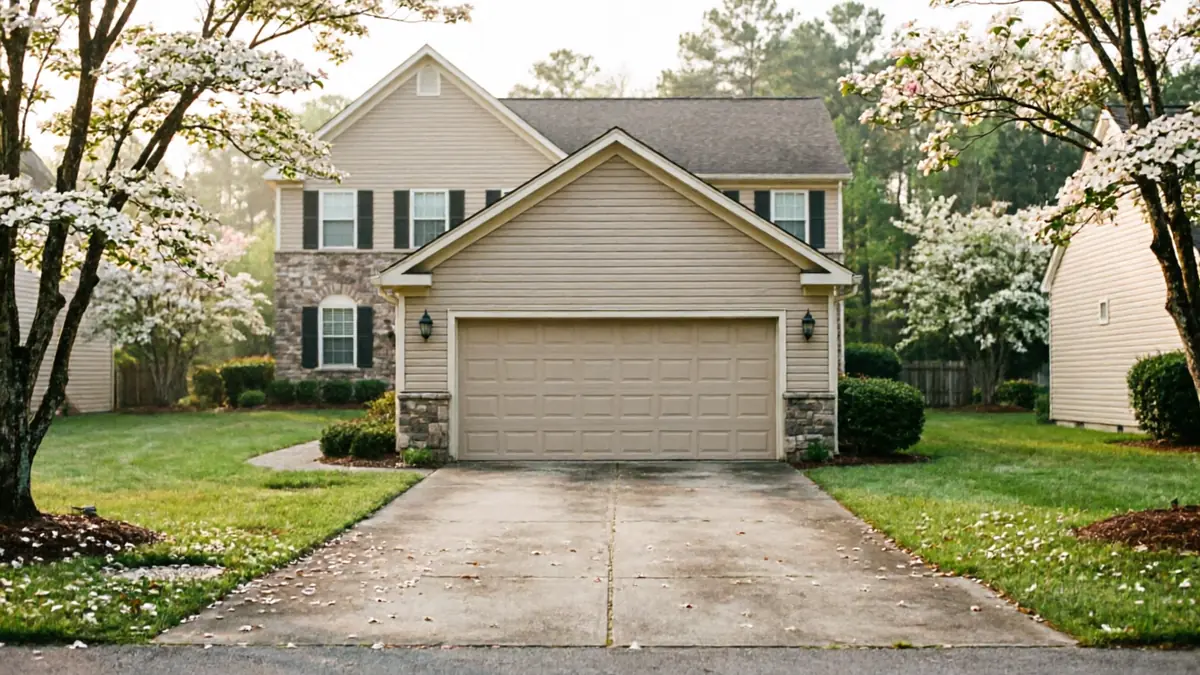
Most of the houses in this service area went up between 1990 and 2012, with the median build year landing around 2001. That one fact shapes almost every call we run. Across the 11 named subdivisions that make up this market, the stock is overwhelmingly 2000s construction - which means steel sectional doors, torsion springs sized for builder-grade loads, and openers that were state of the market in the early 2000s, not now. A lot of that gear was installed once, at the build, and never touched again.
With 23,727 households and 13,729 owner-occupied houses across the area, that's a large number of garages running the same generation of hardware on roughly the same timeline. Springs rated for a set number of cycles were all wound around the same years, which means a lot of them are approaching failure around the same time, not spread evenly across decades like you'd see in an older or more mixed neighborhood. A service call here isn't guessing at an unknown install date - it's usually confirming what the age of the house already told us before we opened the panel.
The Problem
The calls we get cluster around a few things tied directly to that 1990 to 2012 build window. Torsion springs installed when a house went up in the early 2000s are now old enough to be at or past their rated cycle count, and a spring that's been quietly weakening doesn't always announce itself - sometimes the door just stops lifting evenly, or the opener strains and reverses. Chain-drive openers from that era are also aging out: worn drive gears, sagging chains, and no battery backup, since that wasn't standard equipment when these doors were put in.
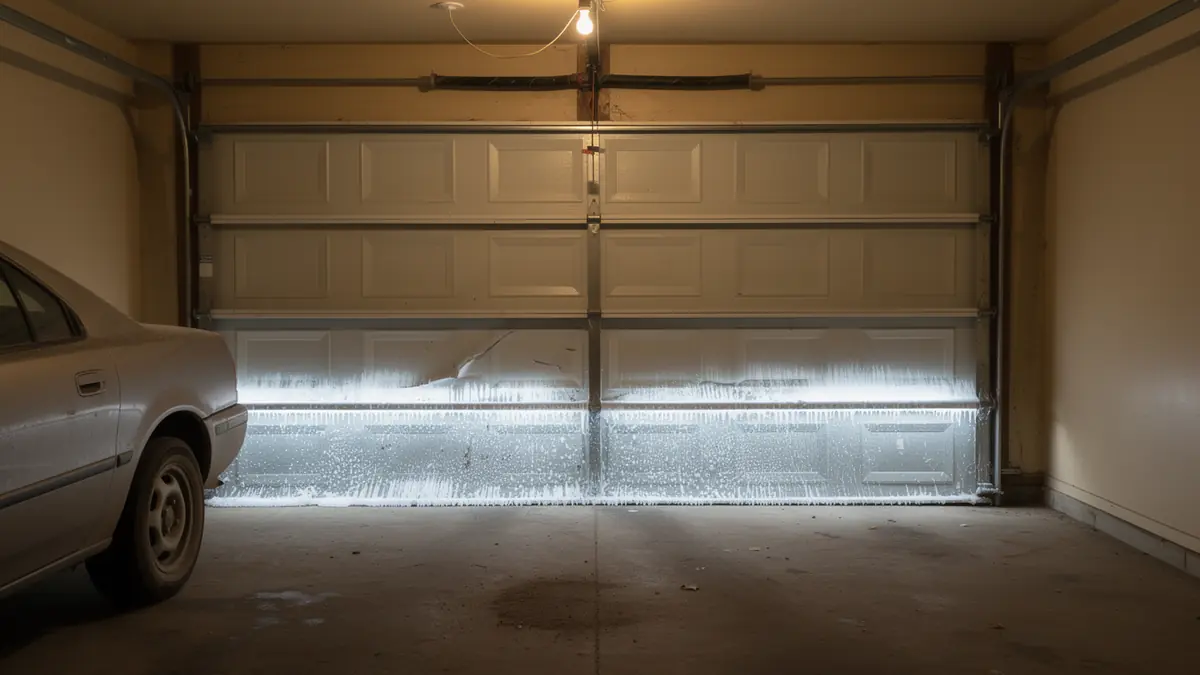
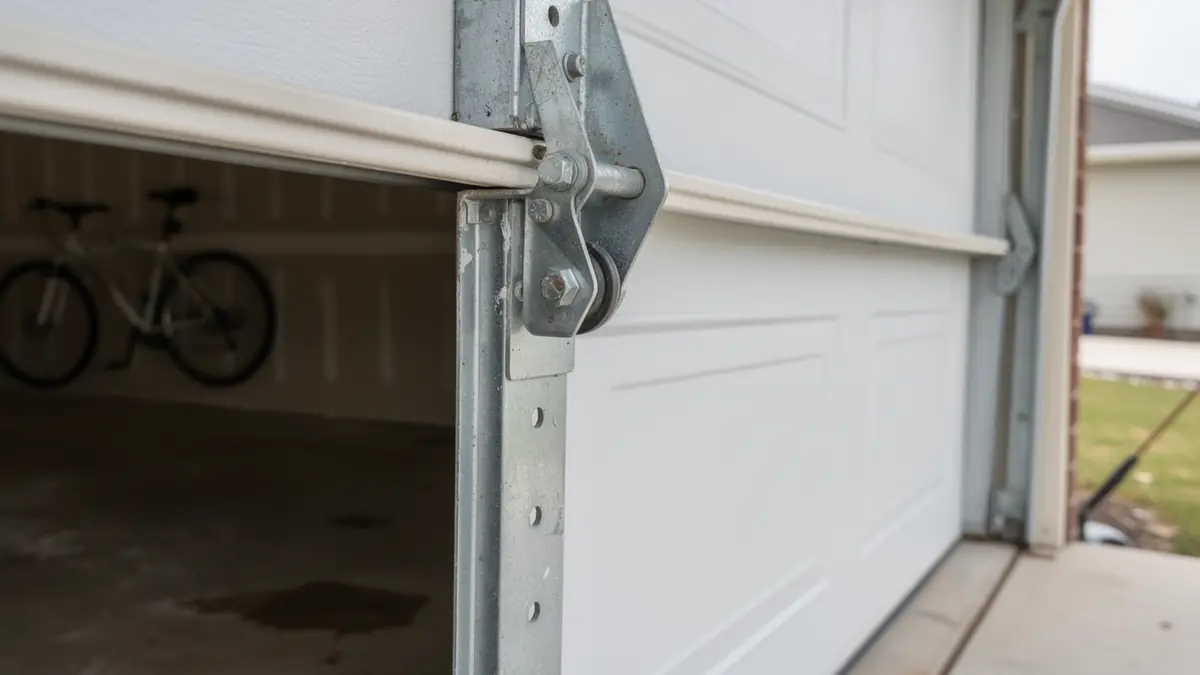
Weatherstripping is the other recurring issue. Rubber seals installed at construction don't last 20-plus years, and once they go brittle they let in drafts and debris, which matters more here than it would in a warmer climate band. A service call usually means pulling the door panel, checking spring wind and cable wear, testing opener force settings, and inspecting the track for the kind of wear you'd expect from a door that's been cycling since the early 2000s. One honest limitation: if the spring has already snapped and bent a cable drum, we're not patching that - the part gets replaced, not repaired.
What It Costs
A service call covers the diagnostic visit - a tech inspecting the door, spring, opener, and track, identifying what's actually failing rather than guessing - plus labor and whatever parts the job needs. We don't quote a flat number for every house in this write-up because what a 2001-built door with original hardware needs is different from what a newer build fifteen minutes away needs, and we'd rather tell you what we find than guess at a figure that doesn't match your door.
What we can say is that the age profile of this area - median household income of $82,692 and a housing stock concentrated in that 1990 to 2012 window - means most jobs here are replacement-of-original-parts work: springs, cables, rollers, openers, rather than full door swaps. Full replacement comes up when a steel panel has rusted through or an opener's circuit board is gone, not as a default recommendation. If a repair gets you another several years out of hardware that's otherwise sound, that's what we tell you, even if replacement would be the bigger ticket.
The Seasonal Bit
This area sits in a cold-moderate climate band, which isn't the deep freeze of the upper Midwest but it's enough to matter. Winter temperature swings tighten torsion springs - metal contracts in the cold, and a spring that's already near the end of its cycle life is more likely to snap on a cold morning than a mild afternoon. Steel door panels contract and expand with the swings too, which is part of why original weatherstripping from a 2001-era install dries out and cracks faster than people expect.
The other seasonal pattern is moisture. Humidity swings through the year affect wood jambs and painted trim around the door opening, and track alignment can shift slightly as a house settles and the framing around it moves with temperature and moisture. None of this is dramatic the way a hard freeze state would be, but it's steady wear that adds up over the two decades most of these doors have been in service, and it's why a spring that looked fine in October sometimes fails in January.
Talk to a local pro
Garage door trouble in Buford?
Same-day service with honest, upfront quotes.