What Local Conditions Do
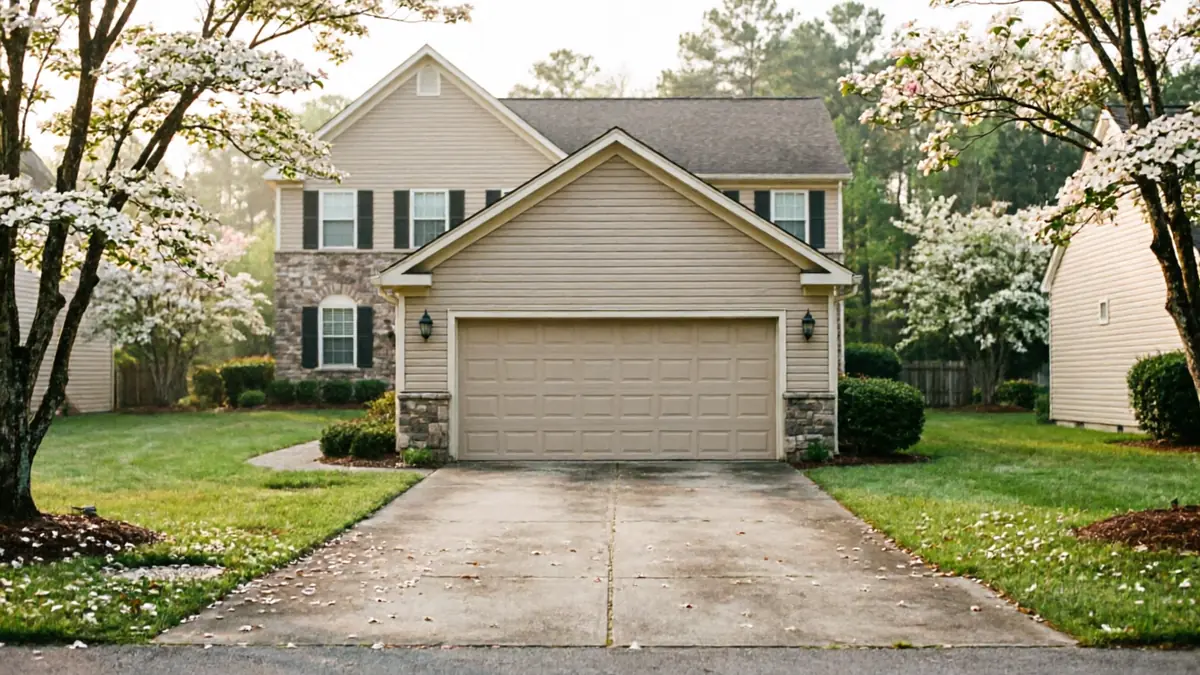
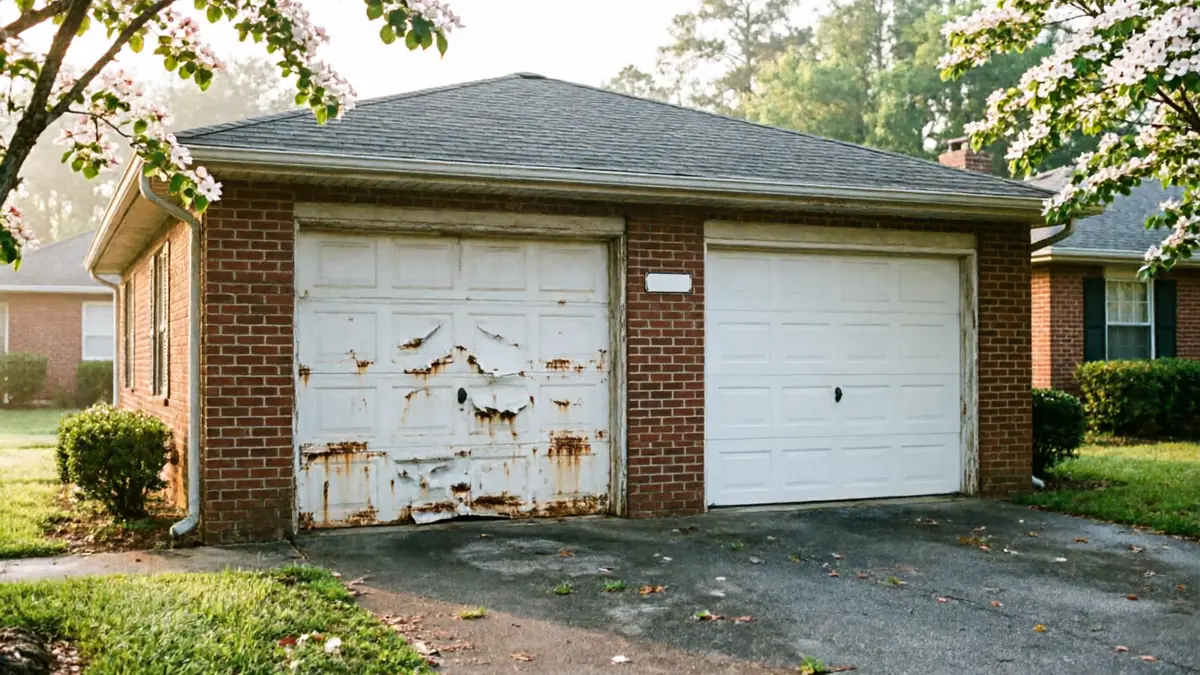
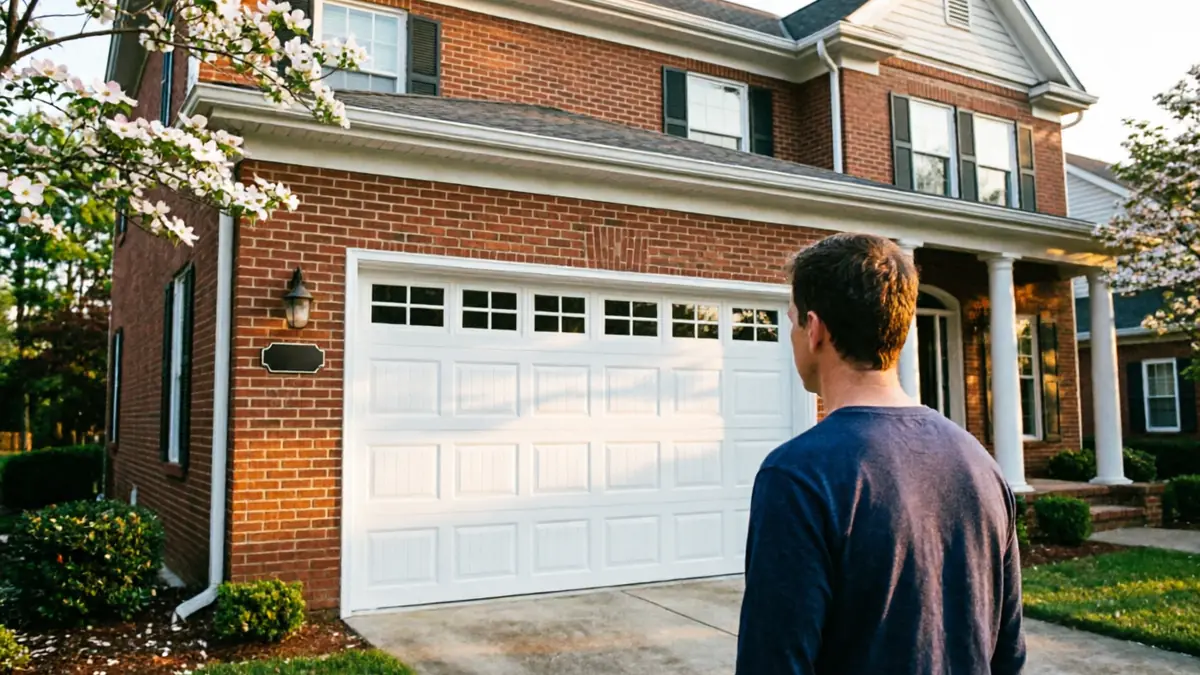
Most houses in this part of Buford went up between 1990 and 2012, with the median landing around 2001. That run of construction means a lot of garages still have their original builder-grade opener: a chain-drive unit on a steel rail, wired straight into house power, with no battery backup because that wasn't standard equipment when these homes were framed. Across the eleven areas we work in - from Flowery Branch five miles out to Russell twenty miles east - the housing stock skews the same way, mostly 2000s-era builds. That matters because an opener from that period is now twenty-plus years old. The logic board, the drive gear, the safety sensors - all of it is original unless someone's already swapped it. A unit that age doesn't fail dramatically. It gets slow, it reverses for no reason, or it just stops answering the remote one morning. None of that is dramatic until the day you need it to work and it doesn't.
The Problem
Here's where it gets specific to houses like these: a builder-grade opener wired directly to house power has no fallback when the power goes out. No battery, no backup, nothing. The door stays shut, or stuck half-open if it cut out mid-cycle, until someone pulls the manual release cord. That cord exists on every opener, including the original ones in these homes, but a lot of owners have never used it and don't know where the slack in the track actually is. We see this mostly in houses that haven't touched their opener since it was installed - which, given the 1990-2012 build window here, is a lot of them. The honest limitation: we can't tell you over the phone whether your specific opener has a battery backup kit already wired in or not. Some owners added one later, most didn't. You have to look at the unit, or have someone look at it, to know which category you're in.
What It Costs
We're not going to hand you a number here that doesn't match what's actually in your garage, because the range is wide and depends on what you're starting with. A straightforward battery backup add-on to an existing opener is a different job than replacing a dead board on a unit old enough that the manufacturer doesn't stock parts for it anymore - and with openers original to 1990s and 2000s construction, that second case comes up more than you'd think. The honest answer is we quote it after we see the unit, the mounting, and whether the existing wiring supports a backup kit without a rework. What we can tell you is that waiting until a power cut strands the door is the expensive way to find out, because at that point it's an emergency call instead of a planned one.
The Seasonal Bit
This area sits in a cold moderate climate band, which means winter brings ice and the occasional hard freeze, and that's exactly the weather that knocks out power in the first place. A downed line or a tripped transformer during a cold snap is the scenario where a builder-grade opener with no backup leaves you stuck - door down, car inside, and a release cord you've got to find in the dark. It's not a constant problem. Most of the year an opener that's wired straight to the wall works fine. It's the overlap of an aging unit, a cold-weather outage, and a homeowner who's never located the manual release that turns a minor inconvenience into a genuine hassle. If your opener is original to a house built in that 1990-2012 run, it's worth knowing where that cord is before the first ice storm, not during it.
Talk to a local pro
Garage door trouble in Buford?
Same-day service with honest, upfront quotes.