
Hand-lift balance test
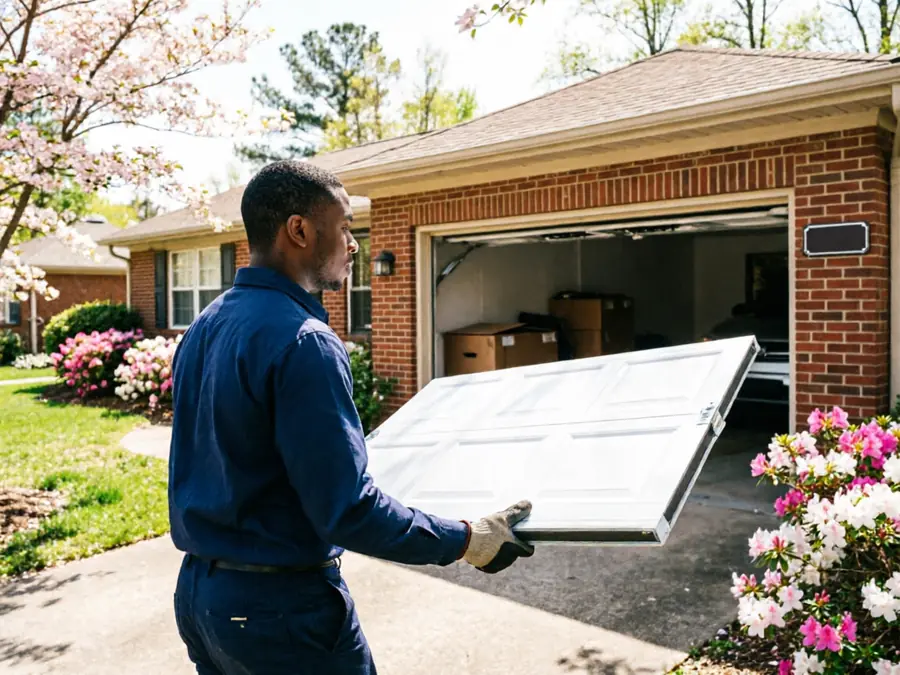
Nothing has been swapped out yet in a lot of these garages. You can check the door balance by pulling the release and lifting by hand - it should hold at waist height on its own.
Flowery Branch, Buford
Flowery Branch homes went up mostly after 2000, so the springs, rollers, and openers are usually original factory parts nearing the end of their rated cycles.
DIY or pro
A good amount of what a maintenance visit covers in Flowery Branch, you can do with a ladder and twenty minutes. Houses here cluster around a 2008 median build year, which means most doors are still running the torsion springs, rollers, and cable drums the builder put in.
Nothing has been swapped out yet in a lot of these garages. You can check the door balance by pulling the release and lifting by hand - it should hold at waist height on its own.
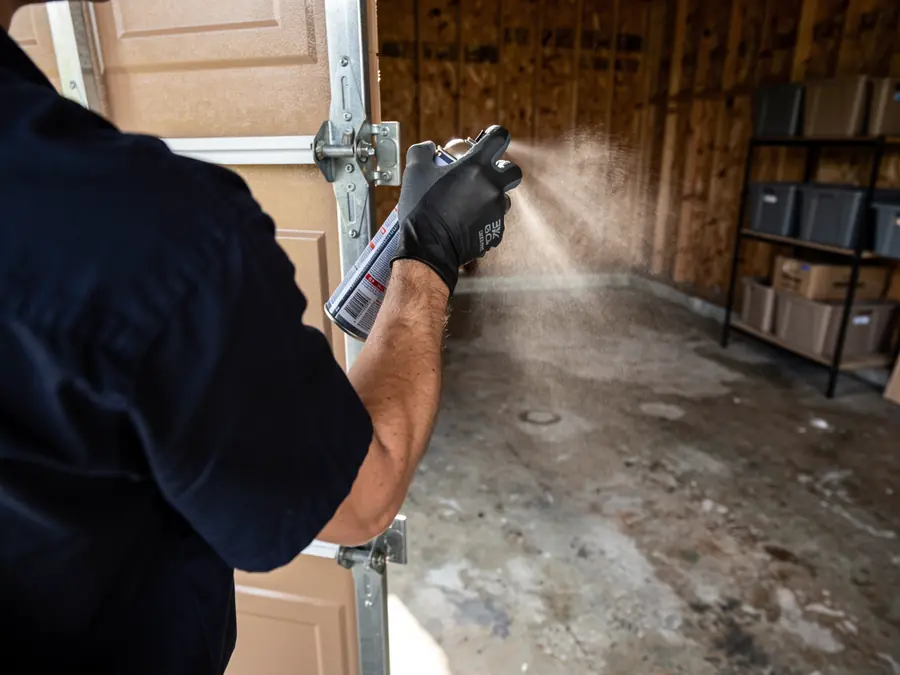
You can look at the rollers for flat spots or rust streaks, and wipe down the tracks instead of spraying them with anything heavy. What you shouldn't touch is the spring itself.
A torsion spring under tension that's never been serviced since 2008 is holding roughly seventeen years of stored force, and backing off the set screws on a cone you've never worked with is how people end up in the ER. Lubricating the hinges and checking the weatherstrip is yours to do. Anything involving the spring, the drums, or the opener's force settings is not a weekend project, it's a call.
Watch-outs
The failure point we see most in this part of the service area isn't rust and it isn't age in the usual sense - it's a door that's been running on factory settings for close to two decades without anyone checking them. Builder-installed openers from the 2000s often have the travel limits and force settings set once at install and never touched again. As the spring loses a small percentage of tension each year, the opener compensates by pushing harder, which nobody notices until the day it doesn't compensate enough and the door reverses off the floor, or worse, doesn't reverse when it should. The other common spot: original rollers that were adequate in 2008 but were never top-tier even then. They start binding in the track, the opener strains against the friction, and homeowners read that as 'the opener is dying' when it's actually a $20-30 part fighting a worn track. Skipping the diagnosis step and jumping straight to opener replacement is the expensive version of this mistake.
Local causes
This area sits in a cold-moderate climate band, which matters more for maintenance timing than people expect. Flowery Branch doesn't get the brutal freeze-thaw cycling of a true northern climate, but it gets enough cold snaps each winter to stiffen grease in rollers and hinges that haven't been serviced since the house was built.
A door that's never been lubricated runs fine for most of the year and then struggles on the coldest mornings, which owners often mistake for an opener problem instead of a lubrication problem.
Add in that median household income here runs higher than many surrounding areas, and what we see in practice is more owners who bought the door with the house and simply never thought about it again - no reason to, until something sticks.
The age of the stock cuts both ways: these doors are young enough that steel hasn't fatigued, but old enough that the original lubricant has broken down and the spring has quietly lost tension nobody's measured.
The repair
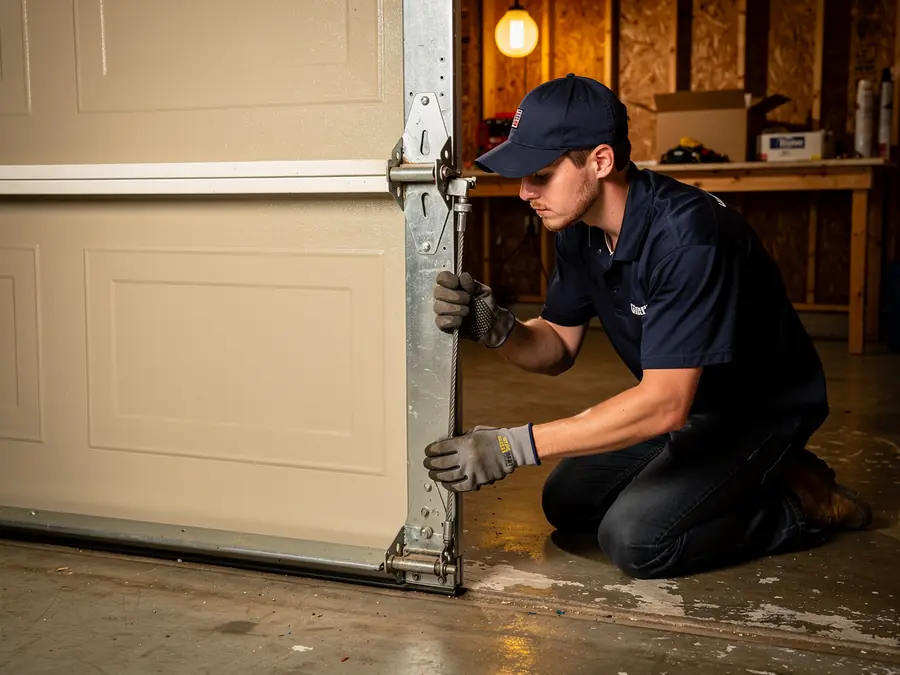
A maintenance visit on a 2008-era Flowery Branch door starts with checking spring tension against the door's actual weight, not just eyeballing the lift. We check and reset opener force and travel limits, since those are almost always still at factory defaults. Rollers get inspected individually - on a door this age, it's common to find half the rollers fine and the other half worn, and we don't replace what doesn't need it. Track alignment gets checked, hinges and the top roller brackets get lubricated with the right grease for a cold-moderate climate, not a general household oil that'll gum up by next winter. We'll also check the cables for fraying at the drum, since that's the part most likely to show wear first on hardware this old. One honest limit: if the spring is already showing heavy wear or inconsistent coils, we won't just lubricate around it and call it maintenance - that's a point where fixing it now costs less than an emergency call later. For more on the company and the Buford base this service runs from, see our <a href="/garage-door-maintenance-buford-ga">Buford maintenance page</a> or check <a href="/coverage/flowery-branch/">coverage details for Flowery Branch</a>.
Questions
Houses in this part of the service area have a median build year around 2008, and most are part of the broader 2000s housing wave across the area. That means a lot of garages are still running their original builder-grade springs, rollers, and openers, never serviced or replaced since the house went up.
This area sits in a cold-moderate climate band, so it doesn't see extreme freeze cycles, but cold mornings are enough to stiffen old grease in rollers and hinges that have never been serviced. That shows up as a door that sticks or struggles only on the coldest days of the year.
Not always. On doors from the 2000s, opener strain is often caused by a worn roller or a spring that's lost tension, not the opener itself. We check those first since replacing an opener that's compensating for a mechanical problem just moves the symptom, it doesn't fix it.
No, this service runs from Buford, about 5 miles away. We don't have a branch location in Flowery Branch, and we won't claim a local response time we can't back up - we schedule maintenance visits out from the Buford base.
Explore more
Ready when you are
Buford Garage Door Pros repairs and installs garage doors, springs and openers in Buford, GA and the surrounding area.